




Why Some AI Use Cases Should Never Leave the Pilot Stage
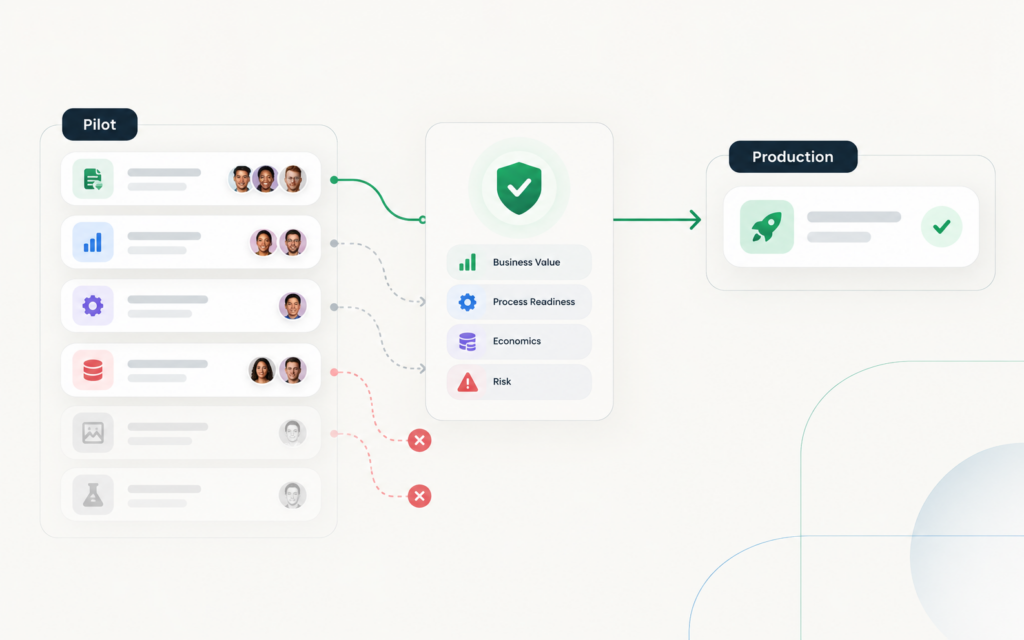
AI pilots are useful because they allow organisations to test an idea before committing significant engineering resources to production. But proving that AI can perform a task is not the same as proving that the use case is worth deploying across the business. That distinction is becoming increasingly important as enterprise experimentation grows. Deloitte’s 2026 […]
Why AI Implementation Should Be Managed as a Business Capability
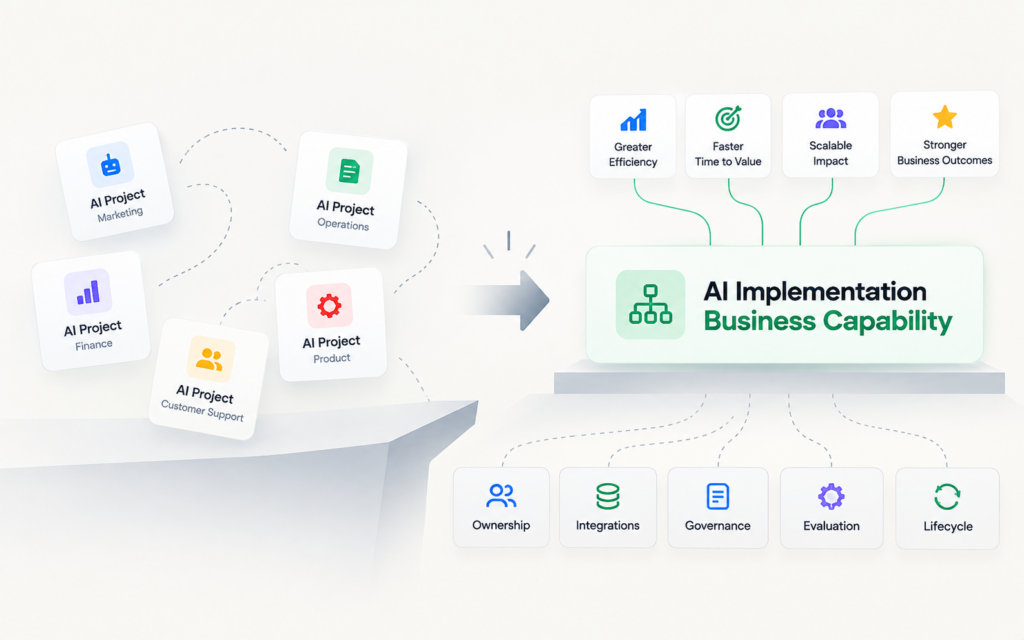
Many organisations no longer have a shortage of AI ideas. Business teams can identify processes that could benefit from automation, employees are experimenting with AI tools, and leadership teams increasingly understand where AI could improve operational performance. The more difficult problem is implementation. Each opportunity still needs to move through process analysis, system design, integration, […]
Why Enterprise AI Programs Stall Between Strategy and Execution
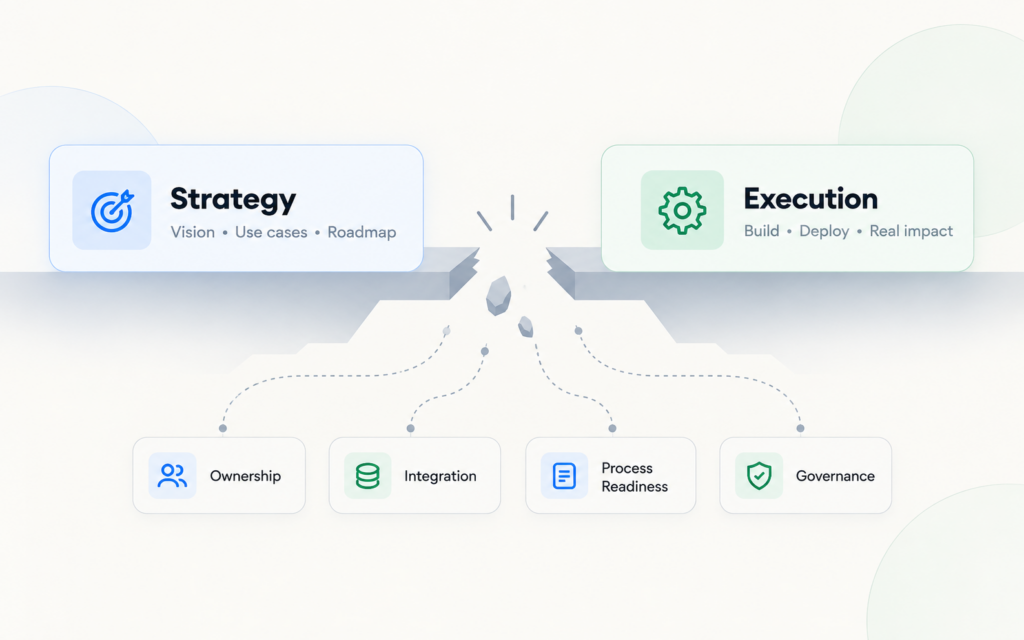
Enterprise AI has moved well beyond experimentation. Organisations are investing in generative AI, automation, AI agents, and internal AI applications across finance, customer operations, HR, sales, reporting, knowledge management and more. Many leadership teams have already identified promising use cases and established priorities for where AI could create business value. The more difficult stage begins […]
Why AI Strategy Must Begin With Operating-Model Design, Not Tool Selection
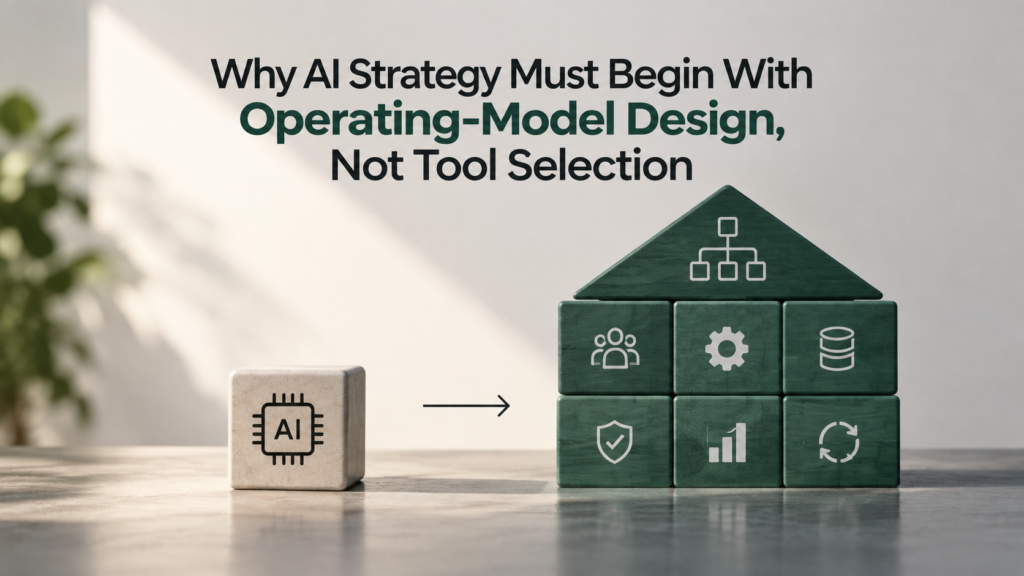
Many enterprise AI initiatives begin with a technology question. Leadership teams compare models, copilots, automation platforms, agent frameworks, and software vendors to determine what the organisation should adopt. These decisions matter, but they are more useful after the organisation has defined how AI is expected to fit into the way work is performed. AI systems […]
From AI Strategy to Operational Capability: A Framework for Enterprise AI Execution
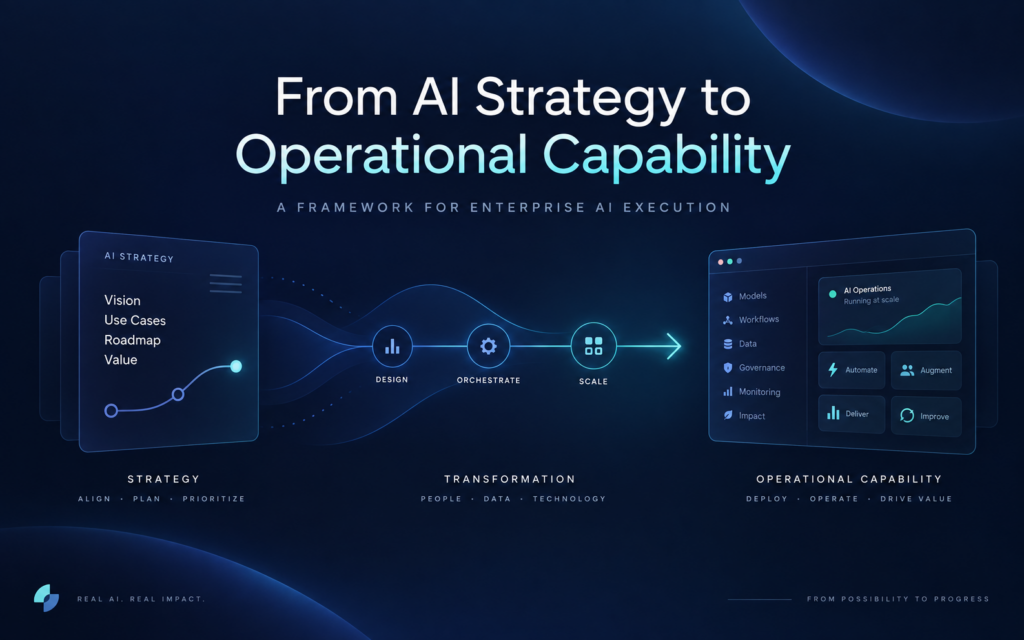
Many organisations have reached a point where AI is already part of the strategic agenda. Leadership teams are exploring opportunities to reduce manual work, improve decision-making, increase operational capacity, strengthen customer service, or create new ways of working across the business. Some have already invested in generative AI tools, automation platforms, internal assistants, AI agents, […]
The Difference Between Adopting AI Tools and Becoming an AI-Enabled Organisation
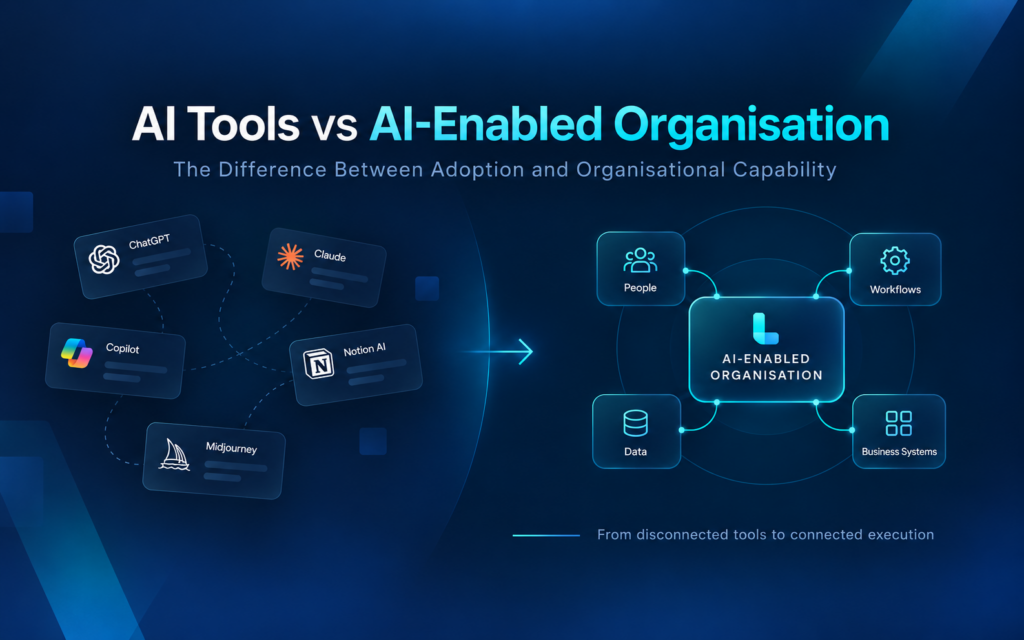
An AI-enabled organisation is not simply one where employees use AI tools. It is one where AI is integrated into workflows, systems, decision-making, and operating processes in ways that change how work is executed across the business. Many organisations have already adopted generative AI, copilots, automation platforms, and AI assistants. Employees use them to draft […]
Dedicated AI Engineers vs Freelancers: Which Model Is More Reliable?
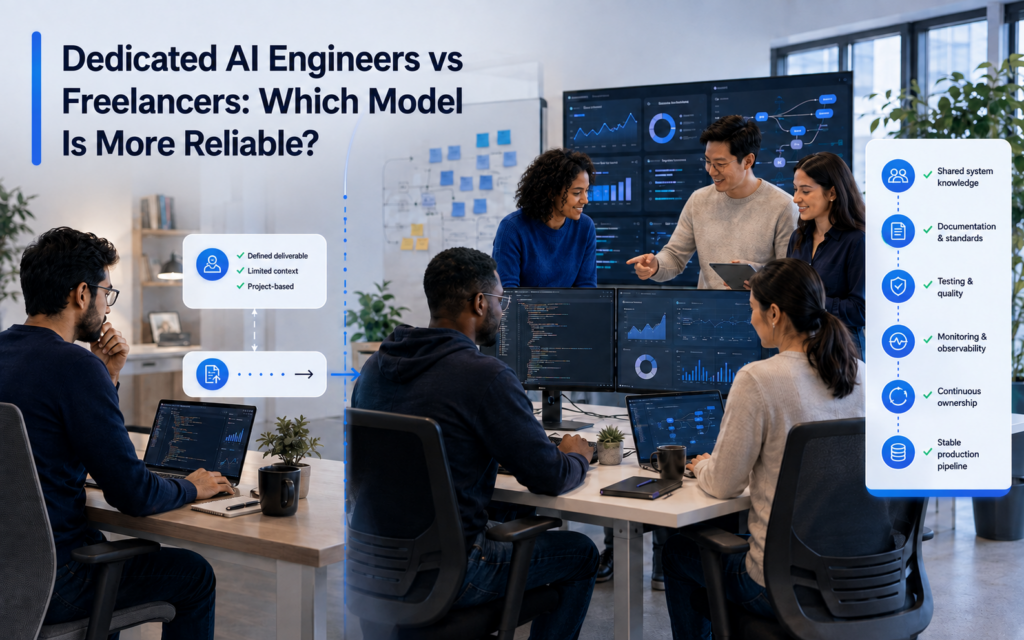
Companies can hire strong AI automation talent through either model. The difference lies in how the work is organised after the contract starts. A freelancer can be a practical choice for a short, defined assignment. A dedicated AI engineer is usually more reliable for ongoing work that touches company data, internal systems, customer workflows, or […]
How Embedded AI Engineers Help Startups Deploy Faster

Startups often identify valuable AI use cases long before they have the engineering capacity to deploy them. A founder may see an opportunity to automate customer support, improve internal operations, build an AI-enabled product, or connect fragmented systems. The idea may be clear, yet execution competes with product development, customer requests, infrastructure work, and fundraising […]
How to Prioritise an Automation Backlog
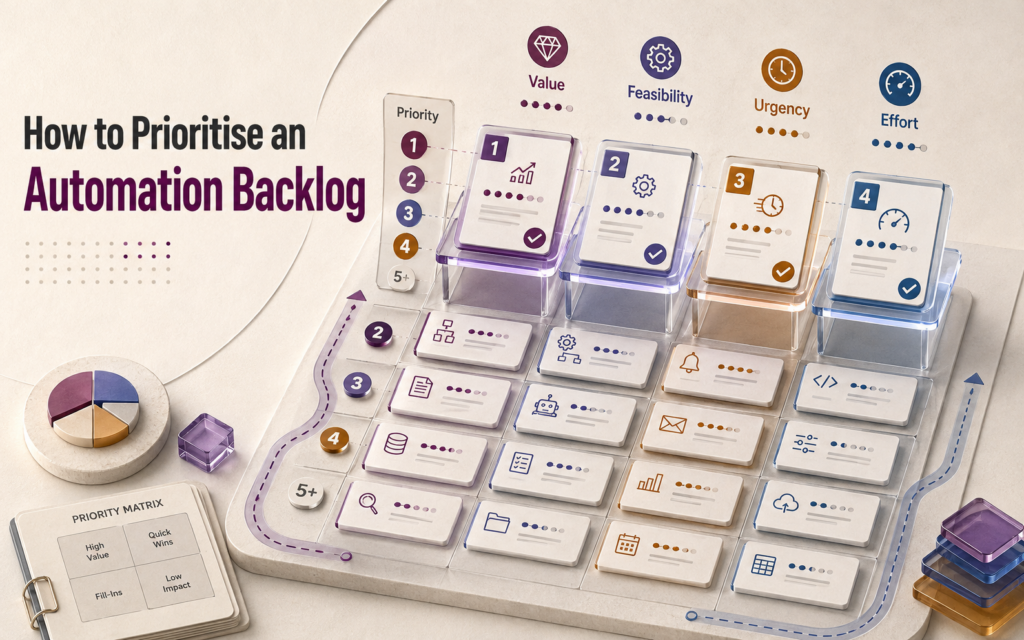
An automation backlog often begins with a few reasonable requests. Sales wants leads transferred into the CRM. Finance wants invoices routed for approval. Recruitment wants interview scheduling automated. Operations wants recurring reports prepared without manual consolidation. As more departments identify opportunities, the list grows faster than the organisation can deliver. High-value projects become mixed with […]
The 12-Point AI Automation Readiness Checklist for Business Processes
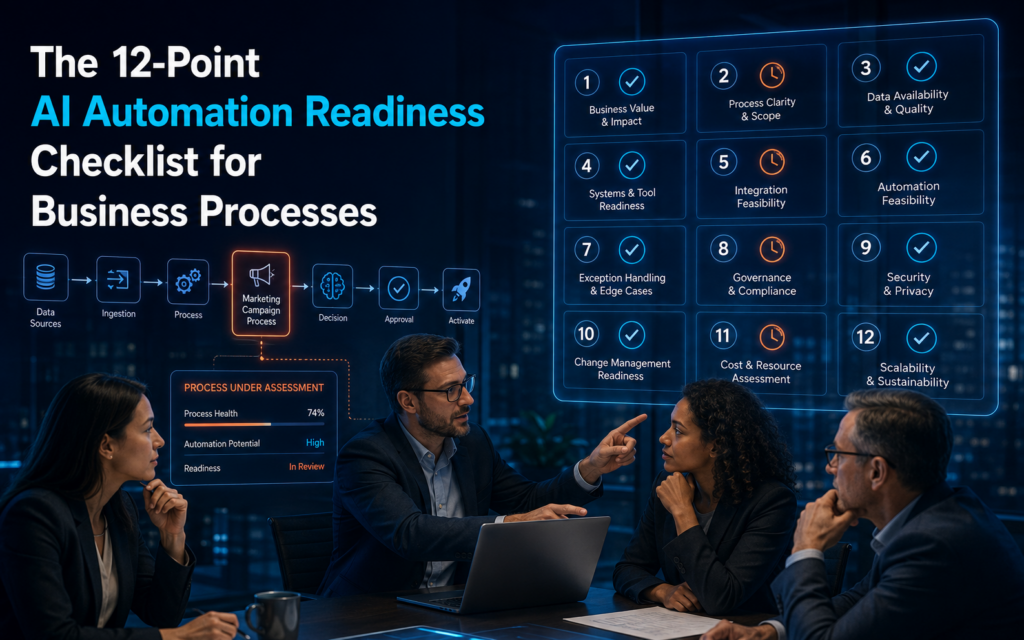
Identifying a business process that could benefit from AI automation is only the beginning. Before development starts, the organisation must determine whether the process, data, systems, people, and controls are ready to support a reliable automated workflow. A process may appear suitable because it is repetitive, time-consuming, or prone to delays. Development can still stall […]